Showing posts with label amazon publishing. Show all posts

Saturday, May 6, 2017

You got what it takes to be a full-time author?


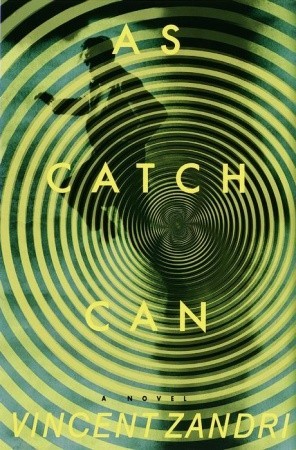
My very first novel back in the day of big advances ...
I've been doing this writing gig for a long time now. Full-time. Some years have been spectacular. You know, those years when I'm scoring big contracts and winning some prestigious awards, and hitting all the lists.

Then there are those years where all I hear are crickets, the bank account is dwindling, and the passengers are jumping ship.

Most years, however, fall somewhere in between the highs and the lows, and that's actually a good place to be. Because in the writing business, things are never as good as they seem, nor are they as bad.

The only thing you can control is the writing. At least, that's what my first editor at Delacorte Publishing, Jacob Hoye, used to tell me. And he was spot on. So long as you're true to your craft, everything else can go to hell.

Now, with further ado, you got what it takes to be a full-time author?


Today THE REMAINS is just 0.99...
Grab it and be thrilled...

WWW.VINCENTZANDRI.COM


Friday, August 8, 2014

Preston and NYTimes Resort to Pathetic Tactics


Preston, an admitted wimp, talks tough via the NYTimes ...


I've been in the limelight recently with my take on the Amazon/Hachette situation. My opinion on the matter is said to be somewhat unique in that I don't support one side or the other. I would like to see a healthy publishing environment where many publishers compete for the right to publish great books for low costs to consumers. Seems like a no-brainer to me. I said as much on my interview this week at Fox News.

Recently The New York Times featured me in an article that was pretty much balanced in its take on the publishing war situation, if you want to call it that. The reporter, David Streitfeld, and I have become professional friends over the years we've corresponded via Internet, telephone, and more recently, in person. But the latest article the journalist penned regarding Douglas Preston and his encouraging 900 authors to sign a petition against Amazon and its practices is so off base as to be not considered journalism, but instead, an attack on a company that has treated me, my books, my family, and my career, far better than the corporate giants who make up the Big 5.

(Me, taking a breath, ...)

Questions and more:

--Why do I feel like The New York Times, and Mr. Streitfeld in particular, take an opinion of Amazon Publishing that is not far different from Jimmy Carter's take on the terrorist organization Hamas, which utilizes little children as human shields to protect their missiles which they indiscriminately lob at Israel? Amazon Publishing wasn't born with the sole purpose to destroy Big Publishing anymore than Israel was created to crush Palestine. AP was born as a result of Big Publishing's mistakes, greed, and mismanagement. They have thrived out of a reader's basic need for good books at low prices. They have thrived out of an author's need to make a living without being a slave to an antiquated system that places writers at the bottom of the totem pole. 

--What is wrong with a major publishing company that wants to treat its authors like human beings and offer books up to its readers at low costs, and willing to take a huge loss as the same time? It's easy for the Times to select an author like Preston to give them the cocaine they need for their anti-Amazon fix, when said author is speaking to them from a cozy writer's cabin on a golden pond only feet away from his mansion. Of course Preston doesn't want to see change, folks. He's swimming in Hachette loot. Do you think he gives a rat's ass about the mid-list author barely making a living? Trust me mid-list author, you have about as much chance of being invited to the Preston's for dinner as Nancy Pellosi does of housing all those poor south-of-the-border kids who were dropped off at the border. 

--Have we, as a country, become so disenchanted with "winners" and "doers" that we want nothing more than to see success become failure? Have we become jealous and bitter over someone else's success? Preston describes himself in the NYTimes piece as a wimp and a boy who used to run from fights. That's pathetic. I prefer the company of strong people who stand up for strong values.

--I was treated so poorly by a Big 5 publisher that I nearly had a nervous breakdown. For certain, their dropping of me and many other authors over a corporate merger, resulted in my wife and I divorcing when I nearly went bankrupt. People in the business whom I thought were my friends turned out to be morally corrupt and concerned with saving themselves.

--It took me years to battle back to my level of success when none of the Big 5 would touch me because I hadn't earned out my advance (Of course I didn't earn out my advance. I was dropped before I had the chance!). Because in the publishing business in NYC, if you don't earn out your advance, it's not the publisher's fault. It's the author's fault. But when you score, it's because of an awesome publisher marketing program. Later on, when I was able to sell hundreds of thousands of copies of these same books via Amazon Publishing, suddenly, I'm not only back to making a living, I'm building up an audience that my Big 5 Publisher prevented me from establishing by not only dropping me, but by holding my book rights hostage for 8 years ... Hey Hachette and the Big 5, if you're gonna drop an author, then how's about releasing their books rights immediately!!!!????. Perhaps Mr. Stretfield would like to write an article about that.

--Listen up Hachette Authors, it's not Amazon Publishing that's holding you and your books hostage. It's Hachette Publishing's corporate giants and their Hampton's beach house mortgages and their Park Avenue rentals. Wake up, you are being used in a ploy meant to dismantle a success story, when in fact, reporters like Mr. Streitfeld are not only championing an antiquated and author-unfriendly system (and this goes for you too bookstores and your "returns" policy), they are doing so not with true reporting, but with propaganda. This isn't journalism, it's butchery.

--I still support a healthy publishing environment, and I hope to God that publishers like Hachette wake up and realize that by trying to fabricate a bully out of another publisher is really just a maneuver to tug at the heartstrings of those who are ill informed. Let's all get on the same page and create a new New York and a new publishing world with lots of publishers who offer great books at low costs. Come on David Streitfeld, you are so much better than this! And sorry, Big 5 New York, this might mean that you have to give up the Broadway location, move to Jersey, and buy a metal building for both publishing and distribution. Instead of lunch at Les Halles, you can eat at Franks' Diner. Costs less, the savings of which will be passed on to authors and readers. And you authors out there who are drinking the NYTimes and Preston Kool-Aid, save yourself now. You are being used for their own profit, for their own agendas, and as a palliative for something that is seriously missing in their souls and in their lives.


But don't take my word for it. Berry Eisler has written far more eloquently about this matter than I ever could in a response to today's NYTimes article. Get Berry's blog here:


WWW.VINCENTZANDRI.COM

Wednesday, July 23, 2014

100 Miles from a Bookstore


In the places where some of us spend the summer, there is no such thing as a bookstore. You cannot drop in casually or order a book sent home. Or perhaps the nearest bookstore does not have the kind of book you need. 

Yet books are necessities. There are long, rainy days when you crave reading... And you may be 100 miles from the nearest bookstore. Perhaps 1,000 miles....But there's a bookstore that works all summer long....If you're not sure what you want, just write and ask. It is waiting for you ... A letter will bring it instantly. There will be no delay. 

We arrange it so that each book arrives on the proper date. So when one book is read the next arrives automatically!


Words written by the sales staff at Amazon Books?

Not at all.

These words were written in 1915 by the sale staff at the old Scribners Bookstore on Fifth Avenue in NYC. It was a time when readers not only craved good books for a good price, they took advantage of stores like Scribners who were willing to go the extra mile by sending their books to the consumer "automatically." 

Scribners wasn't just a store. It was a publisher too, responsible for the likes of Ernest Hemingway and F. Scott Fitzgerald. Scribners edited these authors, promoted their work, and sold their books in the Scribners bookstore, an outlet that attempted to deliver their products "instantly" to the consumer.

Sound familiar? 

Perhaps all publishers, bookstores, and authors can take a lesson from a system that worked quite well a century ago.


Sunday, July 6, 2014

End of the Road...

...or is it just the start?


A month on the global road:
--16,860 miles traveled by air, including a perfect circle around the globe, heading on an east-bound course the entire way (NYC to NYC) 
--Seven flights
--Six countries, three continents
--At least four different time zones (I've lost count)
--Temperatures ranging from 45F to 115F
--Modes of transportation: Airliner, boat, rickshaw, tuck tuck, tram, train, 4x4, car, van, elephant
--Food: vegetarian, seafood, mutton, beef

--Average amount of sleep per night: 4-5 hours
--Number of currencies: Four
--Terrorist attacks while en route to Dehli: two (both by Maoist Rebels aimed at the railroads. Total dead and injured: 100+)
--Top memories: The burning of the dead in Lumbini. The cleansing of the body in Varanasi, the giant orange swastika a holy backdrop. Monsoon rain and winds pummeling our little boat on the upper Ganges, and a human skull lying jaw up on the banks where we anchored and held onto our ratted rooftop tarp for dear life. Swimming downstream in the Ganges, nearly drowning when we hit a stretch of water so deep, the clear-over-gravel-color river turned to blue. The overnight train to Agra, sleeping beside dozens of Indians, young and old. The woman who rushed the train on a stop from Occha to Agra, slipping between the car and the platform, her right leg cut off just below the knee as the train pulled out of the station. Touching, for the first time, an elephant's ear, its smooth almost silky texture taking me by complete surprise. The nervousness of a rhino cooling itself with mud only a few feet away from where I stood in the back of the 4x4 ...

Next stop...who knows.

WWW.VINCENTZANDRI.COM


Saturday, September 29, 2012

Libraries Get It

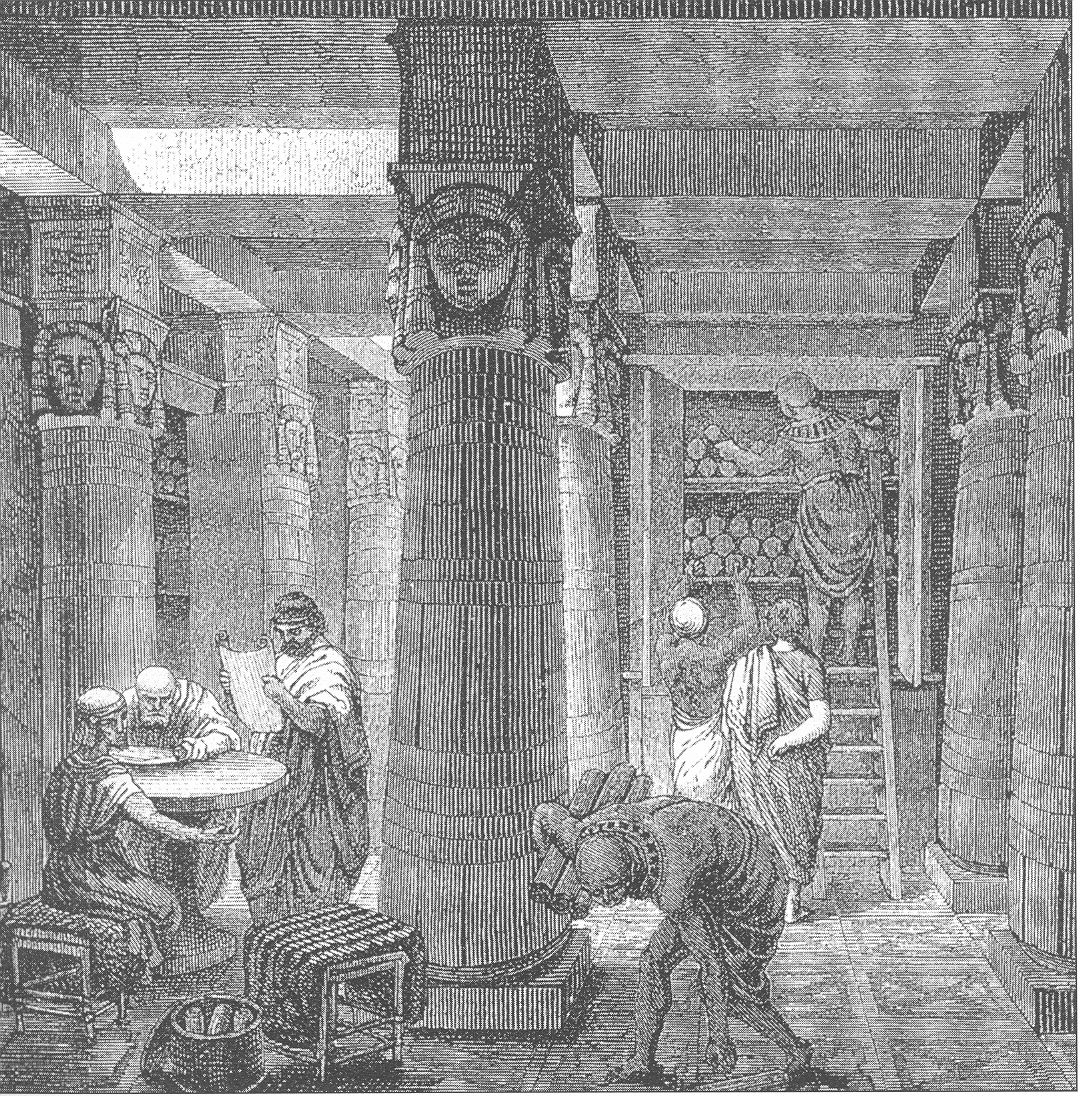
The great Alexandrian Library: "Believe it or not, one day, the scroll will be replaced by something called a mass market paperback book..."


I'm week three into the re-release of five novels along with the release of two new novels: BLUE MOONLIGHT and THE DISAPPEARANCE OF GRACE. The former by a major, Thomas & Mercer of Amazon Publishing and the latter from an indie, StoneHouse Ink. While the "Blue" E-Book edition, especially Kindle, is being pushed in a major way, it's also available in paper and audio, etc. For the time being however, "Grace" is available in E-Book only. In the meantime the new editions of my five previously published novels are moving like crazy. In E-Book primarily.

You see where I'm going with this...

In the past three weeks I've moved more units of my novels than I did in an entire first year with Delacorte. No lie. Much of that has to do with the tremendous author support I am lucky enough to enjoy from Amazon Publishing (They are so good, they even push my independent books, if you can imagine that...), but it also has a lot to do with the changing nature of publishing. E-Books have been and are now becoming the most popular way by which we read. The mass market paperback is quickly disappearing. So is the hardcover while the trade paperback takes over the roll of both.

This leaves me in a bit of a conundrum. I find myself wanting to do some in-person promotion of my books, aside from the stuff I do at several writerly book conferences every year (I never sell many books at these things anyway since they are attended primarily by other writers and all we do is have fun eating and drinking together). But approaching brick and mortar bookstores with the prospect of a book signing in support of paper being published by their major competitor is probably a road I want to avoid. And besides, book signings are always a gamble anyway. In short, they suck.

But there are other avenues to explore. Schools, universities, and hell, even book signings at coffee shops and my favorite, the local corner gin mill. And then there's the holy grail of book venues: the library. I have always been a fan of libraries and the fact that no matter what happens in terms of the evolutionary/de-evolutionary business/retail aspect of writing, the library will always withstand the test of time. A place to store many volumes, both ancient and new, as well as a place to share and exchange ideas. From Socretes to Stephen King, the library has always been a refuge for the intellectual, for the hopeful, the creative, the thinker, and the dreamer.

That clearly in mind, I contacted the head rep for my local library system, the Albany Public Library and asked her about setting up an event much like the one we did for Moonlight Falls back in 2010. This one would be in Dec/Jan in conjunction with yet another new Thomas & Mercer novel, MURDER BY MOONLIGHT, a fictional take on the infamous Porco axe murder case which hit New York's Capital region some years back. She was happy to hear from me for more than one reason. I played drums in her band a while ago, and we are friends. She was delighted to set up an event for "Murder." But just as I was about to tell her how great the trade paperback version of "Murder" looked, she said, "We're really pushing E-Books these days."

I must admit, I was taken a bit back. Me, the king of E-Books.

Libraries pushing E-Books...What a concept.

That said, my library event will more than likely be about the E-Book version of my brand new book and it will take place inside the hallowed halls of an institution older than even the world's most ancient cathedral. But then, E-Books are becoming far more popular than paper and libraries recognize this. Doesn't mean they are about to give up their paper. Just means they are adapting. Can't say the same thing about bookstores. But something tells me they'll get it eventually. Hopefully before it's too late.


Friday, June 1, 2012

Quality or Quantity?


As authors in this, the new golden age of writing, we find ourselves writing more novels than ever. It's all about the content, as they say. Who are they? The ones in the know. The ones who get the fact that the more books you have for sale as E-Book, especially Kindle, the better you will do in the marketplace.

And so we write...

We write without pause.
We write with abandon.
We write when we are inspired and when we are not.
We write like someone or something is chasing our tail, not the least of which is death.
We write because people find reading sexy again when you can do it bed with a digital device.
We write because we can make a good living from it.
We write because we have no choice but to write.

But just remember, we should not write if the writing is going so fast that it is not good writing.
You with me here?
Ask yourself this: Am I sacrificing quality for speed?


Wednesday, May 30, 2012

Out On a Limb


We had a bad series of violent storms yesterday afternoon in upstate New York. The trees, especially the old ones, took major hits from some pretty dramatic lightening strikes. Now there's a crew of tree workers right outside the window of my fourth floor writing studio taking down a huge maple tree that's got to be seventy or eighty years old.

It's kind of a sad site.

But I keep focusing on this one man who is tied on to the branch above him. He's hovering like a spider about twenty-five feet above the ground and working in the pouring rain, with the occasional flash of lightening and thunder cracking all around him. He's wearing a hardhat and a pair of heavy duty gloves and he's operating a hefty chainsaw. He seems to be enjoying his work, at least from the vantage point of my open top floor window.

It dawns on me that this man could choose a safer line of work. Something more sedate and office-like. But he prefers the danger of the high in the sky tree work. He likes working in the rain and the violent weather. He likes the insecurity of it all, the way it makes his blood flow faster through his veins than that of the blood of a man who prefers to play it safe.

When I travel to a distant place like West, Africa to report on what's happening there or when I start writing a new novel with no definite plan in mind, I experience pretty much the same adrenalin fueled rush that tree worker is feeling right now. It's a dangerous job being a writer. You never know what will happen, and always, there's the chance of crashing and burning.

What about you? Are you willing to go out on a limb as a writer?


Saturday, March 10, 2012

Freedom of Choice


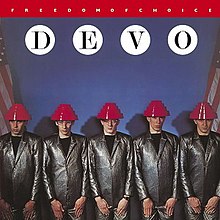
Freedom of Choice or D(e)-EVOlution


Choices.
We live by them. That is, we want to have a life. A real life free of other people making decisions for us, whether we like them or not. Choice is freedom and anything contrary to that is slavery. Pure and simple.

Just last evening I ran across an interview Pay It Forward author and indie publishing proponent, Catherine Ryan Hyde, conducted with bestselling author, Barry Eisler. The topic of discussion was none other than his now infamous interview regarding indie as opposed to legacy publishing with self-published sensation, J.A. Konrath, which they have since published under the title, Be The Monkey. In this very important interview, Eisler talks about the success he's enjoyed not only as an indie published author, but also as a big six and Amazon-hybrid published author.

If you recall, and as Hyde astutely points out in her piece, Eisler is almost single-handedly credited with giving legitimacy to indie and self-publishing when he recently declined a mid-six-figure advance from St. Martin's Press in order to publish on his own. And in doing so, Eisler freed himself not only of the poor royalties the legacy publishers issue to writers, but he freed up his rights. In a word, Eisler proved that authors are no longer bound to traditional methods of publishing. In a word, we now have choices. And those choices are affording us the freedom to write when and what we want, and they are also making us much more money than we ever dreamed of.

While many industry players who work in the legacy publishing business, including many agents, have been understandably upset at the power indie publishing has built up over the past few years and the absolute threat it has born upon the traditional establishment, big publishing is still brushing off the digital revolution like it's nothing more than this month's fad. After all, they were the only game in town for an author like myself who doesn't see this as a hobby, but as a means for making a solid living. But what has apparently shocked Eisler more than denial of the obvious, is the resistance, if not outright contempt, he's received from other writers. Writers who apparently do not wish to enjoy the freedom of choice.   

Says Eisler:

"The most surprising negative reaction I’ve received, though, has been from writers.  And the reason this one has surprised me most is because for me, more choice is an inherently good thing.  It’s just intrinsic and axiomatic to my personality—I want choice because it gives me greater flexibility, increased power, and a better likelihood of achieving the outcomes I want.  And my fundamental message to authors is pretty simple:

'Hey, for the first time, we authors have real choices.  We can stay with the legacy model, we can self-publish, and we can go with the Amazon hybrid or ‘new’ publishing paradigm, which is based more on direct-to-consumer marketing than it is on distribution.  We can publish some of our works via one route, and other works via another.  We have more choice, and that’s giving us more power.  Isn’t that awesome?'"

I've said it before and here I go saying it again: for a popular author to maintain a good living in this the digital age of publishing, he or she needs to engage in a variety of publishing options. Legacy publishing (they still distribute and attract reviewers like no other), indie-based-small press (they offer the benefits of self-publishing such as author input on cover art while paying out a 50% royalty for e-Books as opposed to the legacy-based 17.5%), Amazon Hybrid (all the benefits of a major publisher while abiding by the indie model of author input and a 50% royalty on e-Books), and finally self publishing (DIY means you are in control from "Once upon a time..." to publication and beyond).

 I've engaged in every one of these types of publishing except for self-publishing. I just haven't had the time required to do so. But all that will change in the next six months with the re-publication of my literary novel, Permanence, and a handful of short stories that were previously published in small literary magazines like Maryland Review, Orange County Magazine and Negative Capability. For the first time in my publishing history, I'm no longer a slave to one particular form of publishing. Nobody tells me what to do and how to do it. I don't sit up at night worrying myself to death over my next contract and advance, or if it will happen at all. In a word, I could care less. I have choices now and I know my books are going to sell regardless of who publishes them.

I once went five years without a publishing contract because I wasn't aware of the choices. I was ignorant. A slave to an industry that would tell me they loved my books but that I just hadn't proven that I could sell to the reading populace, even after having earned a mid-six figure advance (yup, just like the one Eisler refused) from a Random House imprint. All that changed last April and May when I moved over 100,000 copies of The Innocent, which lead to a "very nice" seven book deal with Thomas & Mercer (Amazon Hybrid). The Innocent is about to see its third printing and will no doubt sell another hundred thousands copies if not more. Not just because another publisher believes in it, but because I chose to exercise my choice of publishing manner. In doing so I seized an opportunity and developed the skill to survive in this, the toughest game in town. Last year I made more money in royalties than your average accountant. And my pocketbook ain't nearly as deep as Eisler's.

Choices are everything in life. Barry Eisler and other progressive minded authors like him have proven it, time and time again. They are not just industry renegades, they are businessmen and women. Like it or not, writing is a business, not just an art. Any writing professor or literary purist who thumbs his nose at indie publishing will no doubt do so while slogging his way through the dreary wet cold of a mid-winter afternoon on his way to teaching yet another class. Ah yes, teaching: the only way many stuck-in-the-past writers can make a living since they can't make one on the paltry royalty system of the legacy publisher. If that teacher would like to get out of the classroom, perhaps it's time to belly up to the future and engage in several forms of publishing. Then he won't be teaching for a living. He'll be writing.

We don't get to choose just one mate. We play the field until we find the right soul mate.
We don't live in a single spot because we're told to do so.
We don't follow a single religion or abide by a single leader because we'll be shot or beheaded if we don't.
We exercise the freedom of choice.
And it makes our lives richer in many ways. The same should be said of how we choose to publish our words.

GET MORE ZANDRI NOVELS: WWW.VINCENTZANDRI.COM