Showing posts with label traditional publishing. Show all posts

Wednesday, September 18, 2019

Publishing Advances aren't Real Money


 Publishing Advances aren't Real Money...

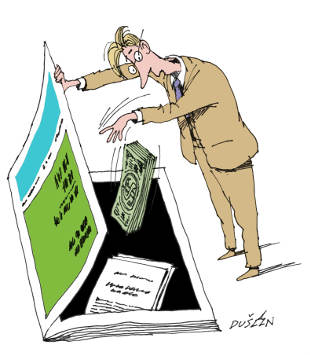
I realize this is a hard concept for non-industry insiders to grasp. Some publishing outfit like Delacorte gives you $235K for two books. You get the check, after the agent takes his 15%, and you put it in the bank, and you proceed to spend the crap out of it. You do this because you automatically assume there will be more checks like that one coming.

And why not?

You're the toast of NYC, everyone is buying you drinks and steaks, you're partying like a rock star at the Gramercy Park Hotel with other hot authors and agents, you're messing around with your publicist because you're going through your first divorce so why the hell not. You even find yourself chatting it up with Monica Lewinsky on the Amtrak. Clooney and Dreamworks are calling for the movie rights and so are foreign rights cats, and you just put a significant down payment on a new house in the burbs. Life's pretty freakin' good.

You've made it baby!

But in all reality, you've screwed yourself.

Why? Because a year down the road you'll learn the sad truth. You didn't earn out your advance, meaning book sales weren't enough to cover those big fat checks they've been sending you. It means, technically speaking, you owe them that money. Since they're not going to ask for it back, they do this instead: "Hit the road Jack, and don't let the door slap you on the ass on the way out." Other publishers won't touch you either because they have the numbers in front of them to prove what a loser you are. Numbers, by the way, that you somehow aren't privy to.

I'm writing about this today, as is Chuck Wendig, thanks to a really good piece published in Medium by Heather Demetrios: “How To Lose A Third Of A Million Dollars Without Even Trying.” Both articles were brought to my attention by author and pal, Belinda Frisch. Chuck's article in particular really lays out the F'd up math associated with advances and sales of eBook, paper, and audio.   

In a nut shell, Heather's story is so much like my own, it's scary. Even the part where she admits to coming close to a total mental breakdown after making the big time, baby! Authors work so hard, become so emotionally invested in their work, that we don't crave validation for our efforts, we lust validation. We're willing to sacrifice anything to get it. So when a publisher offers us huge advances, we jump at them like a starving dog will leap off the floor for just a taste of raw meat. We lose sight of the big picture and the more than likely scenario of not earning out our advances. What happens is, future advances get smaller and smaller, and we find ourselves writing more and more, in desperate attempt the jump at whatever paltry advance we can get our hands on, just to keep up with the Internet bills.

So much for the big time.

What Heather doesn't write about however, is making a shift from traditional publishing to indie publishing whereby suddenly the author is in control of the product, the marketing, and inevitably the sales. One of the best decisions I made as an author was to go indie with some of my series and titles, and it has guaranteed me a steady income that's only increasing annually. Some books have sold so well that I've been offered new traditional book deals with decent advances (not even close to $235K however).

But there's a major difference between my inking a new deal today as opposed to years past: I no longer depend on the advances for my fiduciary well being. I no longer depend on stellar sales with these publishers. I no longer depend on anything that's out of my freaking control. The indie publishing half of me has freed me up so much, that I rarely email my agent, other than the occasional, "Hey what's up?" In year's past, I would pester him with daily emails. "Hey man, any word from the publisher? I desperately need money. The new wife has packed her bags and she's walking out the door..."

I wrote about my experiences in a nifty little book, The Hybrid Author Mindset: The totally honest, myth-busting, realistic, non-politically correct guide to succeeding at publishing traditionally and independently


It's only 2.99 on Amazon if you wanna check it out. Unlike other how-to books, I reveal my personal story about my publishing journey, warts, divorces, red bank accounts, and all. But it also contains the good stuff, like when I sold over 100K copies of The Innocent (formerly As Catch Can) in a little more than a month and how that one pivotal event led to a new cycle of brand new book deals.

Heather is committed to teaching newbie authors about the perils of modern publishing, and there are many of them. For writers, publishing books is an art. For publishers, publishing is a business and it's a cut throat one at that. Sorry to be the bearer of this little reality bite, but talent doesn't mean shit. You're just a number to them, an invoice, a spreadsheet, an email that can easily be ghosted when you're not selling up to expectations or they're just pain sick of you as a person.

In short. Write your books and put your heart and soul into them. Make them the best they can be. But be warned, if you're going for the traditional deal, the journey will be met with great peril, even if you nail the big time advance. Take the money, but at the same time, take matters into your own hands and free yourself from the gate keeper's and the money lender's chains. Invest in yourself and your own list of titles. Publish both traditionally and independently. Go Hybrid. It's the only path forward in the 21st century.

WWW.VINCENTZANDRI.COM


Saturday, December 8, 2018

The Lady in the Gift Shop

The gym where I lift weights in Florence, Italy, is located on the second floor of a century-plus old building. In fact, I think it used to be a library or a bookstore as evidenced by its beautiful hardwood floors and nineteenth century spiral staircase (which is enclosed in glass according to Italy's stringent historical preservation laws).

During the small breaks between sets, I sometimes go to the window for a breath of fresh air. The window looks out onto the busy cobbled street below.

It also looks upon a small gift shop. 

The shop proprietor is an attractive, forty-something brunette woman who always dresses in black, be it a skirt and tights, or slacks. She always wears high heels too. Fashionista. I don't know how many years I've been coming to Italy for my extended writing retreats (I've spent the past 20 years traveling for assignments of one kind or another), but it's been more than a decade. That same woman has been tending to the same shop with the same merchandise for all that time. Everyday her routine is the same. She opens up the glass door, sweeps and mops the wood floor till it's so clean you can eat off of it. She then does something peculiar. She arranges and re-arranges the already perfectly displayed little knickknacks and jewelry that are for sale.

This attention to detail has always perplexed me. When she arrives, the items have already been set in place as well as anyone can set them. They really don't need any attention at all. But she takes the time to shift an item here and an item there, always taking a step back to review and evaluate the move in her head, like an artist would examine a carefully applied brushstroke or maybe a professional chess player thinking and rethinking a move. My workout can sometimes last up to an hour and all during that hour, she will be arranging and rearranging the little gifts. The decorative shot glasses, the bracelets, the necklaces, the little glass trees, and miniature Ponte Vecchios and Duomos.

Her dedication to job and duty...her pride...got me to thinking about my books. All too often, we publish a book and simply forget about it. It's done, finished, published. Not much more can be done to improve upon it other than a little marketing. But marketing doesn't improve the product. It merely pushes the existing product, great, good, or piss poor. And it's tough these days for publishers big and small to market a book, unless you're Lee Child.

The books my publishers put out, God bless them, are untouchable once published. The publishers simply do not have the time nor the resources to correct editorial mistakes. If a word or two is misspelled, well then, suck it up buttercup. But when it comes to the books I indie publish under my own label, Bear Media, I am able to make corrections. I can fix any misspellings, mess with the cover if it isn't right, or work on improving the product description.

Maybe the book has been published for years. Maybe even six or seven years. But that doesn't mean it can't be improved upon. I can bet the woman in the gift shop who is constantly dusting off the merchandise and improving upon its presentation is never satisfied. She can always do better for her customers. I'm no different from the lady in the gift shop. If I can make even a single adjustment in the copy in one of my books, and take a step back to examine it, like a sculptor who's just made the the most delicate of cuts in a statue he carved a decade ago, then it's worth the effort.

Art might be abandoned, but room for improvement is infinite.

WWW.VINCENTZANDRI.COM

Grab The Sam Savage Boxed Set for the weekend and binge some escapist action, adventure, and romance.


Tuesday, October 23, 2018

Do you still need an Agent in 2018?

You need to ask yourself that very question these days as publishing becomes more and more democratized. Indeed all of media for that matter (if someone told me ten years ago I'd be watching my favorite "news" programs on my cell phone and/or via YouTube or FB, I would have said, 'Take another sip.').

One of my good pals in writing and publishing, Ben Sobieck, has sold the film rights to one of his stories not through an agent, but instead, Wattpad. You know, that web portal that allows fans to read your work for free. Who'd a thunk it? In fact, he wrote a book on the subject. You should check it out right HERE.

More and more of my indie books I publish through Bear Media are far outselling anything my publishers own, save a few titles that Thomas & Mercer own (and they know how to sell books, even old books, believe me. One of my bestselling titles, The Remains, is currently being promoted by the house and get this, it's six years old). What this means is, I am placing as much importance, if not more importance, on the indie books as I am my traditionally published products. Lots of crime writers are doing the same thing. Check out this article written for Publishers Weekly in 2016 by Nicole Audrey Spector and you'll see why.

This is not good news for agents. As the one-time frequenters of the New York City steakhouse-acquisition-editor-wet-lunch circuit, many have now ceased to exist. Errr, their businesses have ceased to exist, I should say. Some of the agents I have signed with over the years have either died, or quit the business to enter into something far more lucrative and a million miles away from professional publishing. My agent from the late 1990s, and who sold my first novel for $250K, is now a professional magician. You can't make this shit up, I tell you. Some agents are downsizing, and certainly most of them are weeding out the clients who don't earn or sell at all. Who can blame them?

So then, do I still need an agent in 2018? My answer is yes. Agents aren't only there to get you lucrative deals (this is not a knock, but I think half the deals I've ever made I brought to my agent and not the other way around), they are there to deal with contracts and subsidiary rights. They push your books at book fairs and when possible, try to nab movie/TV rights. In theory anyway. But one of the biggest reasons for having an agent is to help out during times of crisis. You can be damn sure that is Amazon KDP were to challenge my ownership of a certain property or if someone accused me of plagiarism, the first man/woman I'm going to look to for help will be my agent.

I go in more detail to discuss the necessity of agents in my new short book The Hybrid Mindset. I hope you check it out. You can nab the book in eBook or paperback. Or you can read for FREE in KU. 

WWW.VINCENTZANDRI.COM
 

Friday, May 18, 2018

The ever changing, ever volatile publishing landscape...

Where the big books get published or rejected...


...back in the old days (say the mid '90s), when I first started out in this business, I had always intended to write a lot of books as quickly as possible (I got lambasted for this attitude in writing school). I also intended to get them to market as quickly as possible. I would then spend the bulk of my free time on wine, women, and song (I played drums in a bunch of punk bands). Woe was I to find out that while the writing came quickly to me, the publishing game was...to quote one of my late dad's favorite euphemisms...slower than whale shit.

On top of that, it turned out that aside from a very select group of writers (about .0095) of them, acquiring major publishing deals of say, $250K or more (plus the multi-media rights that go with them) every two or three years without question, was akin to winning Power Ball over and over and over again. I hit one of these mega deals right out of the gate and since then, I've struck a ton of "nice" deals, but nothing that nice. Simply put, if your book doesn't earn out and then some, the monies offered goes down on you faster than Stormy Daniels.

Then came the indie publishing movement, and gone suddenly was the query, wait, and hope days. Suddenly, the publishing end of things go from agonizingly slow to as fast as you can put out a book. To make the sauce sweeter, books no longer have a shelf life. They will be published long after you become worm food. Here's what this means (bulleted of course):

1. Your words are no longer dead once the publishers and bookstores say so.
2. Your books become investments, much like mutual funds or perhaps more accurately, real estate. You put up an initial investment and every year, year in and year out, your books earn you a solid return of perhaps %25 (My indie books on average earn me %40 annually, while my mutual funds earn me about %5. You see where I'm going here.)
3. Fiction writing has become not about the initial advance, but more about the tail end "passive income." If I get sick tomorrow, and can't work for a month or two, the money keeps coming in. It also means...and this is the magical unicorn feel good portion of our story...that my kids and their kids will eventually earn several thousand dollars per month for the rest of their lives.

Back to traditional publishing. Yeah, I'm a hybrid guy. I publish traditionally and indie. I do it all, because I lust publication in all its forms. Plus I'm a control freak and I love controlling my own destiny rather than a bunch of accountants and sales reps determining it for me. Over the past seven or eight months I've started working with a new agent on a couple of books that will eventually go up for sale to the big five or four or whatever they are now. We're working very carefully on these books and quite arguably they are the best of my career. In a sense we are manufacturing a deal here, which is precisely the point.

But the going is slow. As a full-time professional writer, I could never depend solely on this "traditional" publishing model. This model is for "authors." Authors generally speaking have day jobs. They are either lawyers, or writing teachers, or famous journalists, or dentists, or what have you. Again, generally speaking, the traditional model is too slow and too risky to actually give up your day job.

However, for those of us who possess God's gift of proliferation (I'm a machine), we can indeed quit the day job and build an indie list to supplement one's traditional efforts. We are not authors, we are "writers." Think about it, in the seven or eight months I've been working on those two big manuscripts with my agent, I've written three full-length genre novels and another six novellas, plus a ton of short journo pieces and blogs. And folks, even though I do this full-time, let's face it, it's part-time work. In other words, Although it looks like I'm always working, I still have time to work out a couple hours a day, take a nap, go fly fishing, fly to Vietnam (did I tell you I'm heading back to Asia next month on a research trip?), or just pretty much do whatever then hell I want to do when I want to do it.

So there you have it, the hybrid life to date.

One bit of news before I go: Amazon Publishing has very abruptly shut down their Kindle Worlds program. A lot of writers are pretty upset about it. About four years ago I was commissioned to write a novella for the program. It was an X-Files novel. It was fun to write and I was paid $10K, but it never saw the light of day since in the end, Fox couldn't come to a satisfactory licensing agreement with Amazon. Ironically, I might now be able to somehow legally publish the book. However, the point here is that AP is going through some definite changes. They've been wonderful to work with (I have 9 novels at Thomas & Mercer), and I hope to work with them again. But take my advice and be sure to diversify your publishing. Go traditional, go indie, go wide, and build up that mailing list. One day sooner than later, you just might be publishing your books directly to readers off your own website.

WWW.VINCENTZANDRI.COM           
Saturday, January 27, 2018

Is it possible to make a living writing fiction?


Signing The Corruptions earlier this year at Mysterious Bookshop in NYC
Probably not if you set out to write literary fiction (I recall one of my assigned reads back in MFA writing school was The Lime Twig by John Hawkes. I nearly barfed it was so boring). Literary authors, in my mind at least, view a commercially successful book as a failure, which is why so many literary writers must teach to make a living. It's different for a genre author. We write books for the masses and gladly take their casheshe for our efforts and in the end, much of our work stands up to the test of fine literature anyway. But I'm getting ahead of my skis here.


The Experiment

This past year (2017), was more or less an experiment precipitated by my having been suddenly fired from the one steady trade journalism gig I had going. It brought in a nice baseline income so that I didn't have to worry so much about royalties and/or advances. Plus I loved the gig. Don't get me wrong, I absolutely needed the book royalties if I was going to survive financially. It's just that because I enjoyed a writing/editing income separate from the fiction, I didn't wake up suddenly in the middle of the night wondering what I could be doing to sell more books.

So, last year, when that ten year gig suddenly vanished due to a cooperate buyout, I found myself with a choice. I could either look for more journalism-freelance writing gigs, or I could concentrate entirely on my fiction efforts and hope that I brought in enough money to at least keep the cable TV on.

Work, work, work

It turned out to be the most productive year in my twenty year professional writing career. I wrote six 60K+ word novels, a couple novellas, and several short stories. In fact, I wrote and published so much stuff that if I write not a single word this year, I am all set for publishing (both indie and traditional) well  into 2019 and perhaps 2020. How did I do it? Simple. I dragged my ass out of bed every Monday morning and set it in the writing chair just like any other working stiff. I wrote whether I wanted to or not (In all candor, I pretended to be an employee of say FOX, and they were expecting me to put out at least one novella per month, or no pay check. The ruse worked!).
Exploring Central American ruins and fictional inspiration this past June

Dollars and cents

Ok, so in terms of dollars and cents, what does all this mean? I'm not going to be entirely transparent here but according to the tax documents I've received thus far, I made a solid mid-five-figures. In terms of more recent years, it wasn't all that great, but this is the nature of the business. Some years you're hitting home runs and scoring major deals and you're pulling in a comfortable six figures whether you like it or not. Other years are down years. Production years I call them. Years when you're working your tail off and not a whole lot is coming in, but the important thing is you're making a living.


 A smart move

For once in my life I made a smart move: Every advance I received (and I took in quite a few of them) over the past five years from agented deals, I invested in mutual funds, which means those monies are working for me on a monthly basis. Another smart thing I did was to invest a big portion of my royalties into my indie books. When you invest in creating a new book, it's almost as if you're buying real estate. Eventually the return on investment will be enough to pay back what you spent and earn you a nice 10-20% per year of passive income from that point on. The key, is to write more quality books that will stand the test of time.


Steady growth 

2017 proved to be an interesting experiment. There were no big advances (I did receive a small four-figure advance from an independent press), no big Book Bubs (I had two Europe only BBs), and no one single title entered into the Amazon Top 100 (that I can recall anyway). Like I've intuited in previous posts, it was a year of steady growth, steady writing, steady sales. And in the end, I earned enough to make a living. I'm actually quite shocked, to be honest. If this were the old days and hybrid authorship were an impossible dream, I would have found myself begging for a job ("Welcome to McDonald's, can I take your order?").

Instead, I'm able to do something most writers only dream about. I can get up every morning, sit myself down at my laptop in my PJs, and write my particular brand of noir and hard-boiled fiction. Hopefully my books are more interesting than the Lime Twig (No offense, Mr. Hawkes). And hopefully they keep on selling so I can continue to work at the only job there is for me.

WWW.VINCENTZANDRI.COM

Friday, December 29, 2017

Goodbye 2017: Don't let the door slap you in the ass...


The researcher in Guatemala
Okay I jest.
2017 was actually a good year for me professionally, not in that I hit any particular home runs with any one or two books like year's past, but damn, did I put out the word count or what?

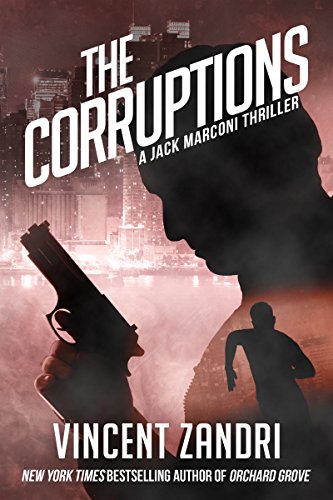
I published both traditionally and indie starting with The Corruptions in hardcover back in February (Polis Books), and then onto Chase Baker and the Spear of Destiny, a new Marconi, Arbor Hill. There was The Handyman Series, the pilot novel in the new Steve Jobz series, The Embalmer, my first collected non-fiction Pieces of Mind, the first Young Chase Baker YA novel, Young Chase Baker and the Cross of the Last Crusade (coming in March '18), a new stand-alone which is currently with my agent, plus the first draft of another stand-alone that will soon be with my agent, and I'm finishing up the year with 20K words on a new Keeper Marconi, Sins of the Sons. And did I mention the short stories that I published in Pulp Metal Magazine that are now available on my own site and of course, Amazon, Nook, and Kobo?
 
I could offer links to all these products but you know where to go to buy them.
WWW.VINCENTZANDRI.COM

New for 2018 will be a brand new short story, HEAD. HEAD will also be included in a new short story collection called Pathological: Collected short reads about sex, lies, and murder. In February The Detonator will be released in hardcover (Polis Books), and I'm very excited about it since it's getting great reviews in PW and Booklist. After that will come the aforementioned Young Chase Baker, then in April, the new Steve Jobz, The Flower Man. In May I'll release the new Marconi, Sins of the Sons. By then I'll know who's taken my new stand-alone, The Doctor Will Kill You Now. I will also have finished up the second stand-alone, No Good to Her Dead. In between these publications look for more short stories and new Handyman episodes.

Okay, that's production side of things. But like I said, this was the first year in which I didn't hit any particular home runs like I have in the past with books like The Remains which went to number 1 overall, or The Innocent which did pretty much the same or Everything Burns which killed it. I attribute this to one, Book Bubs are nearly impossible to get nowadays and two, Amazon KDP seems to have changed up their algorithms again. It means that any books that suddenly spike in sales look suspect and they sometimes will strip you of your rank, dooming the momentum of the book. It's good that Amazon is cracking down on the schemers, but bad for us nice, hardworking folks just trying to make a living.

But if I've learned anything about this year, it's this: slow steady growth is the only tried and trusted path to be on. Anything else is just smoke and mirrors. Those writers who consistently put out good to great content will be rewarded with an ever expanding audience and sales. On the marketing side of things, building your subscriber list has never been more important. I've also hired a marketing crew to handle my AMS, FB, and Book Bub ads and so far they have been doing a fine job. I'm also setting up my own store on my website. What's the address again? WWW.VINCENTZANDRI.COM

2017 was the year I started going from writer, to writer running a business, and I've learned a lot. I pour just about all my money back into the business, but said business is growing, and I can see myself making a passive income in short order that would rival at least a mid-management position at some downtown firm. Imagine that.

On the personal side of things, it's been a bit of a shit show. There were more deaths of friends and family than I care to count, not to mention Sam Shepard. There were more reports of illness, the sudden and unexpected discovery of my own potentially fatal ailments (don't worry, they're under control, but it did get me to thinking about my own mortality), a totally unexpected breakup, a move back to an apartment and other things too banal to mention here. But it was also an exciting year for traveling and adventure, from caving in Guatemala, to fly fishing in Belize, and of course eating my favorite rabbit dish in Italy. The food poisoning in Guatemala was no fun, however.

Sure, life comes at you hard sometimes, but hey, I could be six feet under and that's no fun. The point is to live a great life while you have breath in your lungs and happiness in your heart and soul.

Back to the books...

WWW.VINCENTZANDRI.COM

Friday, December 1, 2017

Writers: Don't be the Starving Farmer...Be the Mega Mart CEO


The Mega Mart

Hey, first off, this is nothing against farmers. I wanna make that perfectly clear from the get go (I love farms and farmers). I'm just using the above-stated title as a metaphor inspired by a short book I read while traveling devoted to modern writing and publishing by hybrid (now almost entirely indie) author, Dean Wesley Smith called The Magic Bakery. (BTW, Smith has made millions as a fiction author).

In so many words, Smith says that one of the big reasons authors don't make a lot of money is because they don't have enough inventory. In other words, their bakery only has one or two pies in it. A person walks in, sees the lack of goodies and walks back out.

Smith also goes deep into copyright as well and provides a very convincing argument on why authors, even when signing traditional deals, should never give away all of their "world" copyrights. What it means is that that product, or pie, in this instance, is gone forever, and in the hands of someone else who will choose to sell it, or not, for the rest of that author's life.

But right now, I wish to concentrate on the inventory side of things. It's taken me a long, long time to realize that as a hybrid author (a guy who publishes traditionally and independently), I have maintained the mindset of the farmer. You know, you work your ass off, cultivating acres of corn, for instance (it could be apples, or cattle, or wheat...but you get the picture). You pray for good weather, you toil, you watch the fruits of your day in and day out labor grow each and every day, week by week, month by month, until finally it's ready to be brought to market.

But that's when the problems set in.

The market forces are beyond your control at that point. Maybe there's a glut of corn that year and you can only charge a price that hardly covers the cost of what it took to produce your crop. Or maybe a tornado hits and your crop is wiped out. Or maybe the supermarket chains that used to carry your corn are closing down or going with a brand new, younger, more tech savvy, more algorithm friendly supplier. Whatever the case, you're shit out of luck.

The ruined harvest
But what about the supermarket CEO?

Who hasn't at one time or another, gone into the mega mart for a head of lettuce, a carton of milk, some toilet paper, and oh yeah, "Don't forget the eggs, honey," and comes back out with three bags full of steaks, potato chips, some lunch meat, a six pack of beer, and "Oh crap, I forgot the eggs."

The point here is that unlike the farmer who is relying on selling one or two products every year and who is entirely at the mercy of forces beyond his or her control, the supermarket CEO is dealing in vast quantities of products, all packed nice and neat with beautiful labels, and smart positioning on the shelves, and even that corny canned-in Musac to enhance the shopping experience. And what else is he doing? He's giving away free samples. A slice of rare roast beef here, a piece of cheese there, or maybe a little hot dog wrapped in dough (I forget what they call them...oh yeah, pigs in a blanket). And many mega marts now encourage you to become a member of the store so that you get a "discount" and they, in turn, grab your email. See how that works?

While the farmer must rely on that one (or two or three) big ass payouts per year in order to make it, the supermarket CEO is doing something extremely savvy. He's making a fortune by selling thousands of products that make him $0.50 here, or a $2.00 there, and he's doing it on a daily basis. He is reliant only on himself and his own imagination and no way in hell is he selling off, say, the produce section to another company for a one time advance so that said company can keep making money off all that greenery forever and ever. At best, the supermarket CEO might make a limited deal with say a Starbucks to come in a set up a space where they'll sell coffee and both entities take a cut of what's sold. But I think by now you get the point.

In this day and age, everything a writer produces of quality, should be controlled by the writer. Even up until recently I've made the mistake of selling properties to publishers who simply do not know how to move product. Nothing against them per se, but what I'm getting at here is that I'm like the farmer in this situation. I am at their mercy. Again, that doesn't mean I am not willing to work with them, but the price and the terms must be right and my corn (my book or short story or article) cannot disappear from my control forever. After all, I have kids who will one day earn from those many ears of corn.

If you're lucky enough to be prolific and talented as a writer, there has never been a better time for you to start your own mega-mart (or magic bakery) full of goodies and products that will not only entice a buyer, but that will encourage that buyer to keep coming back and buying more and more. They don't have to buy thousands of dollars worth of stuff in a single visit, but hey, five bucks here and three bucks there, adds up to a nice chunk of change at the end of the day.

So do yourself a favor come Monday morning. Get up and write not only to put in that daily word count, but write like you're putting a new product on the mega-mart shelf. And once that product is created, produce a new one, and another new one, and another...Then see what happens.

WWW.VINCENTZANDRI.COM


Thursday, November 2, 2017

Market saturation? Nonsense...Build your own tribe separate from Facebook

The writing studio in Florence where I'm currently eating, drinking, writing...
One of my best writing buddies posted on Facebook this morning about his having to burn through two years to get the rights back to one of his novels from a rather prominent publisher. Said publisher wasn't doing dick to promote the book so my bud figured (wisely) he could do a much better job of it on his own.

Go figure.

Someone in the comments mentioned the terrible saturation situation that has afflicted the fiction market (and non-fiction market, I suppose). I guess something like 1.5 million books are being published per year, indie and traditional books combined. Is that possible? Or did I dream that stat?

Whatever the case, I don't consider myself competing against 1.5 million books or a million other authors both dead and alive or those about to be born. I write, for the most part in a specific genre that sees far fewer than 1.5 mil books being published each year. I'm talking noir, hard-boiled mystery, and psychological suspense. I'm also publishing erotic noir/suspense these days (Don't tell my mother). Being that publishing isn't a zero sum game, I consider my true competition to be myself. Sort of like a marathon runner who is always trying to best the completion time of his last race.

Here's how I'm bettering myself every year and improving my chances of success.
1. I'm writing more books per year than ever (and in turn writing less journalism)
2. I've hired a professional marketing team to set up ads and provide Book Bub like promos once every couple of months (right now this "growth" program is costing me a lot of money but in the long run...it's a marathon remember...this will pay off)
3. I'm building up my subscriber list to the tune of 10-15 new readers per day (in general, every time I send out a newsletter, I lose about 10 of these subscribers, leaving me with an excellent positive net return). No longer do I rely on asking my 9K friends and fans on FB to "Buy my shit!"
4. I've hired a brand new literary agent who has a killer reputation and who will most definitely land me more traditional deals, foreign deals, and multi media deals to compliment my indie publishing.
5. I'm also toying with the idea of taking on a small number of writing students who wish to be coached on both manuscript quality and publishing direction (more on this in 2018)
 6. I've rented a new writing studio/apartment and will no longer be writing "out of the house." I've seen lulls in my career happen before (they happen to all of us), and at least two of those times can be attributed to my working "at home."

This list is by no means comprehensive or complete. In fact, it's a fluid work-in-progress. But in the end, I wouldn't be worried about how many books are being published per year. In fact, bring them on, because one, most of them are pure shit. And two, most of the authors who produce those 1.5 mil books will never ever write another book again when they realize just how difficult it is to sell even a single copy.

Now get to work...

WWW.VINCENTZANDRI.COM

Get THE REMAINS for just $1.99 for a limited time


Saturday, April 15, 2017

On Publishing: 5 Rules You Should Break


Any author who isn't considering opening up their own publishing imprint in 2017 is living in the fucking dark ages. Pardon the F word. Sure, publish traditionally. Give to Caesar what is Caeser's. But by all means, take control of your career, and take advantage of all the publishing opps out there, including independent publishing platforms like KDP and D2D.

Publish, not once a year, or twice a year, but all the time. Publish non-stop. Don't let any publishing professionals, agent or editor, tell you you're wearing yourself too thin. Don't take their advice at all in fact when it comes to production and the proliferation of your words. Proliferation scares them. It goes against their traditional mindset. It makes them feel like they are losing control.

What scares the writing traditionalists and academy elites the most? A non-traditional writer who sells. A writer who writes what he wants to write, how he wants to write it. A writer who doesn't bend over to the PC lockstep culture. A writer who refuses to be emasculated by the system. I made well over six figures last year publishing the shit I make up, one way or another. I don't have to teach, I don't have to work at another job I hate. I don't have to grow old and irrelevant by punching a clock for some other asshole. Like the song goes, I live life my way.

You can too, but it takes a crap load of work. In mean time, here's a little advice about 5 traditional publishing rules your should break!

1. Don't sign a contract if you don't have to. Here's why: the publisher will break it if it wants to. You however, being an author and therefore powerless in the publisher's mind, will be expected to adhere to the letter of the law. When it comes to publishers, well, they feel they control your fate. So, like a pilot that purposely crashes the plane into a mountainside, they can tank your book if they so choose. Or they can veer away from the mountain, and make it a bestseller. Once you sign away your rights, they control everything. So bring along a parachute and don't sign if you don't have to.

2. If you must sign a contract, make sure there's no bullshit in there about non-compete clauses, or anything that holds onto your rights, paper or electronic, for more than a period of seven years. Anything more than that, and tell them to hit the road. Publish it under your savvy new imprint and control your own destiny.

3. When your publisher tells you to slow down, nod politely, then write and publish as many stories and novels as possible. Write, publish, repeat. Don't listen to their rules. I've worked with a half dozen major, medium, and small publishers over the course of a 20 year career. Almost every editor, editor in chief, and marketing person I've been involved with over that period are now gone baby gone. If nothing else, professional publishing is a revolving door. No one cares about you, no matter how much they pretend. Take care of yourself first, and publish everything. 

4. Don't suck up to get ahead. If you're like me, a hybrid publishing traditionally and independently, you're still going to find yourself in situations (especially in New York City and LA), where you're going to have to suck up to somebody. Be nice, treat others with the same respect you expect, but don't suck up to get ahead. It's humiliating. Remember, this is 2017, not 2007 or 1997 for that matter. You, the writer, have far more control over the publisher than you think. They need you more than the other way around. What a liberating concept. Like I said, be nice, work with them, market the work they produce for you to the best of your ability. But expect them to work for you as well. Your relationship with them should be a working relationship of mutual admiration and respect. Not one of the writer on his knees and the publisher with his pants unzipped. 

5. You don't need to attend every writers conference on the planet. These are expensive events that are usually attended by the old guard elite who are often paid to be there. Sure, conferences can be fun sometimes, especially for the more social butterfly-like writers. But again, it's one of those situations where conferences need you, more than you need them. It's a cash cow suck up fest. So if you enjoy sucking up while emptying your pockets, go for it.

I could add a sixth rule to break here, like do not waste your money on an MFA, but I'll save that for an essay down the road. For now, just write. Write everyday, write with abandon, write for yourself because that's who you are. Carve those precious gems. Write for traditional publishers but proceed with caution. They will do their best to control you. So don't let them. Control your own destiny. Be your own man. Doesn't matter your gender, grow a new set of balls, and establish your own rules and live by them. Thrive by them. 

Like what you see here? Support the Vox at PATREAN:
WWW.VINCENTZANDRI.COM
Subscibe to my YouTube Channel 


Thursday, April 6, 2017

Zandri is Wide (Not in the Ass) and a First Quarter Assessment: Notes from a Hybrid...No. Whatever


That's me arm-in-arm this past Sunday with the Noir at the Bar crew NYC

You all would have heard by now that Amazon KDP kicked me out of Select apparently for violating the exclusivity agreement once in 2012, once in 2013, and again in 2014. They couldn't prove that I had violated anything by producing the "warning" emails at my request, but they said it is so and if they say it is so I guess it has to be true.

Ever get the feeling the crucifix will one day be replaced with the Amazon logo? 

It's all for the good though, because like those pesky young adults who won't leave their parent's basement, I had been depending upon Select too much as of late for my indie books, and it was time to leave the nest and go wide. Which I have. I'm everywhere except Google at present, but I'll get there too. I'm only one person, people! Maybe I should hire an assistant. Preferably a hot little brunette. Don't get me started...

Onwards. It's the end f the quarter and I'd like to do an entirely non-scientific assessment of this year thus far in sales and productivity. In other words, I'm not going to bore you with specific numbers, but instead just a general accounting of how it's been going with my traditionally published books, my Amazon Imprint Published Books (namely Thomas & Mercer), and my indie books published under my imprint Bear Media (Bear Thrills, Bear Pulp, etc.)

Okay, so the traditional side of things. The hard-cover of The Corruptions arrived in late January while I await the paperback version of Orchard Grove which came out in hard-cover in January of 2017. Both books seem to be doing well, in paper, audio, and especially e-book. Although I don't have the exact sales figure for the first part of this year, I believe we're looking at around 4-5K in sales, mostly in eBook on the back of a Book Bub, which I was fortunate to acquire (and finance). What I must stress here however, is the importance of authors doing their own marketing since leaving it up to the publisher will usually result in crickets. They just don't have the time. One of the books I have going traditionally at present is stinking up the joint which sucks, because when I was publishing it under Bear Thrills it was doing relatively well. Live and learn.

Amazon Imprint Books (Thomas & Mercer): There's been a lot of changes at the firm as of late, and every single one of the editorial and/or marketing people I started out with in 2012 are gone baby gone. Some good people have taken their place, but while last year at this time I was hitting the overall number 1 spot on the Amazon bestsellers list with The Remains (and all the residual sales that went with it), this year thus far has been kind of a yawn. Sure books like The Remains and the Jack Marconi PI novels continue to carry the bulk of the load (I have a whopping 9 books with the firm), there hasn't been a promo yet that's propelled a single title to the top 10 much less the top 100. But that doesn't mean it won't happen next week. So if I had to guess without looking the numbers up, I'm around the 3-4K sales range there.

Indie Books: In terms of full-length novels, I believe I'm somewhere around 15 now. I'm not sure how I've done it, but I've sold around 7-8K books during the first quarter, not including KDP borrows. So that's something to be proud of. The Ashes, the sequel to The Remains, is doing very well, and considering AP passed on it, saying it's too late for a sequel and therefore a "non-starter," I'm more than pleasantly surprised. Now at the same time, I've also given away more than 10K books so far this quarter and if I had to guess, that's one of the reasons for my success (remember, there are hybrid authors out there who sell way more than me, and more who sell way less, so it's all relative).

So where does this leave me? I'm making a nice living, and slowly, incrementally doing better with each new book published one way or another. Some might say I should pick a method of publishing and stick with it, but truth is, if I were to go back to being traditional exclusively, I'd have to pick up more freelance work, or maybe grab a teaching gig. So that's out of the question because I love my freedom. And I'm not ready to go entirely indie either, because I enjoy my books being in stores and libraries, and I love the trade reviews, and you're just not going to get that with indie (sorry for the run-on).

I'd like to think I'll do more books with AP, but I might be tipping the scales with 9 novels right now, plus When Shadows Come is still in the red in terms of its earning out its advance (Come on guys, let's market the hell out of this one. It was selected as a Suspense Magazine Best Book of 2016 for God's sakes...What's not to like?)

So now I'm wide and thus far I'm selling almost the equivalent of what I would have been making in page reads per day at Select. So that's a good thing. But more marketing will be needed in order to get the word out. That includes Facebook and Amazon Ads.

As for the production end of things, you'll recall in a past post that I have committed myself to writing only fiction this year (that can change), and thus far I'm putting out on average 10K new words per week, plus rewrites. So this is a full-time job to be sure. But what this means is, I not only have a new thriller for a traditional publisher to pick up, I am, at the same time, able to publish a series novel, novella, or short story at least once per month. And what's the best marketing tool for a writer? Proliferation. Or, simply writing more books. Write, publish, rinse, repeat. Word of mouth is a big help too, but you have no control over that. So if you're a writer, turn off the Twitter, and get busy. Get writing.

For links to all my "wide ass" books and all the stores that sell them go to:
WWW.VINCENTZANDRI.COM


Saturday, February 25, 2017

Coming Up for Air: Notes from a Hybrid Author (Part ???)


I think it was late August of 2016 when I was informed that my services would no longer be required at the one trade journalism gig I maintained outside of my fiction career. It was a sweet gig that ran for ten years, an absolute lifetime in the fickle world of freelance journalism. I wrote architecture and construction related pieces, and it paid well and I won a bunch of awards along the way.

But after the new owners came in and cleaned house, I searched for another similar job, but my heart wasn't in it, so I abandoned the search almost as soon as it began. Which lead me to the realization that I should be putting that extra time towards creating more fiction in the form of serial novels, stand-alone novels, short stories, and novellas. Material that would provide passive income for years and years, as opposed to journalism in which you get paid for your time.

That said, since September '16, I've written and completed two novels. The Ashes and the forthcoming The Embalmer, the pilot novel in what will be the new Steve Jobz PI series. I've written the pilot episode in a new CIA-inspired series called Assignment Rendition, and completed two new Chase Baker pulp thrillers, Chase Baker and the Dutch Diamonds and Chase Baker and the Spear of Destiny. At present, I'm closing in on the half-way point with another stand-alone thriller, The Girl Who Wasn't There.

Also completed are several short stories, including Moonlight Gets Served which appeared in Pulp Metal Magazine and Dressed to Kill (A Jack "Keeper" Marconi PI Short Shot), among them. The latter was also serialized in Pulp Metal and will be published in its entirety under my own label, Bear Pulp next week sometime. Add in maybe half a dozen essays for the Vox, and several guest posts and pieces, and it's been one hell of a busy six months.

In the midst of all the new work, I also managed to rewrite The Corruptions several times in preparation for its late January '17 publication (Polis Books), along with a new stand alone, The Detonator, which will appear in January '18 in hardcover (also Polis Books). Amazing when you stop to think that I consider this part-time work.

So, with all this material needing homes, kind of like lost, wayward orphans, I will have to make the decision on who will publish what and when. In the old days, you wrote maybe one book per year, and hoped your publisher would push the crap out of it (which they usually don't). But now you have options. You can maintain your own list of titles of which you control the writing and the marketing.

But I'm a strong believer in having your books in the bookstores as well, and that's where the traditional market comes in. I enjoy seeing my novels come out in hardcover and reviewed by the major trade journals and papers. It gives me professional satisfaction and the respect of my peers. But there's nothing like having total control over your books as well, and that's where the beauty of indie publishing becomes self-evident.

I guess some authors choose to go hybrid because they feel it's smart to take advantage of all the publishing options out there in this, the new golden age of genre fiction writing. I do it because I really have no choice. Just make a quick count of all those books and stories I mentioned above. No way a publisher is going to take on all that work. They wouldn't be able to keep up, nor would they want to. I'm curious to see how the next six months goes, and how many more stories and novels I can produce. At 2,000 words per day (good words), I suspect it will be quite a few.

WWW.VINCENTZANDRI.COM


Sunday, September 18, 2016

The Things I Cannot Control

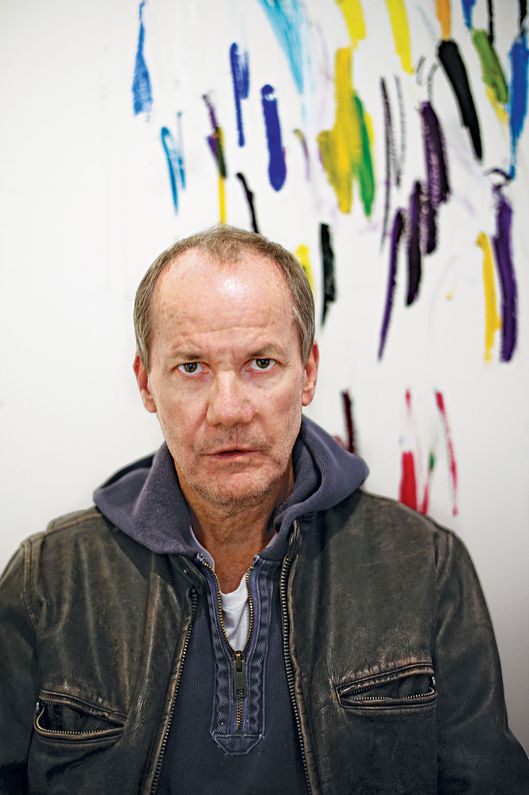
Richard Prince


 A while back...actually a long while back now...my wife and I were having dinner with artist Richard Prince and his wife back when he kept a house in upstate New York. Prince was already a world renowned artist/photographer at the time and a mega success. But he was also a huge noir fan, a book collector, a rare bookstore owner, and also a writer. As we polished off a bottle of wine together while the girls chatted among themselves, he offered me up a bit of advice that I've never forgotten.

But before I reveal the advice, I should tell you that this was around the time I'd signed on for a big advance with Delacorte Publishing for a two book, hard and soft deal, and if I recall correctly, my first novel, The Innocent (As Catch Can, as it was titled back then), had already been published. So I'm guessing the year was around 1999 or 2000. I remember relaying to Richard about how anxious I was about the book's sales, which at the time, weren't exactly hot. Richard nodded, and listened, and then, sitting back in his chair said, "Listen, the only thing you have control over as a writer, is the writing. That's all you can do. Throughout your career publishers and editors and sales people will come and go, but you and your writing will always be there. Concentrate entirely on the writing. Work harder than the other guy.  Make it the most important thing in your life, and you will succeed." 

Of course, many ups and downs have occurred since that dinner at the Prince home. But I have gone on to make a nice, solid, career for myself. I guess you could say, I have become established. But even after hitting two Amazon No. 1 Overall Bestsellers. Even after having spent 4 weeks in the Top ten (with The Innocent), and another three weeks with The Remains. Even after hitting the New York Times and USA Today bestseller lists. Even after winning the PWA Shamus Award (Moonlight Weeps) and the ITW Thriller Award (also Moonlight Weeps), even after selling hundreds of thousands, perhaps even a million, copies of my books over the past five years alone, things still sometimes don't go my way.
The novel that would become The Innocent

Just this past two weeks alone, I learned that one of the architectural trade publications I've been writing and editing for for ten years no longer needs my words now that a new owner has taken over. Add to that a two book deal my agent has been working on for months, which even included a rewrite for the acquiring editor, just went inexplicably belly up. Hmmmmm. Go figure.

There's no one to blame in all of this, since this is how the business side of the writing game works. Nothing is forever. But then, these events most definitely fall into "the things I cannot control" category.

Now, I've also been lucky these past couple weeks.

The novel that was supposed to be sold in said two book deal got immediately picked up by another publisher also in a two book "nice" deal. The book will come out in hardcover in Jan, 2018 and be found on every New Releases table in bookstores from Portland, Maine to Portland, Oregon, as well as on your favorite eReader. Lucky, yes, but in the end, I still had no real control over the deal. It just sort of happened and I'm happy for it.

But what I do have control of is my writing. No matter what happens on the business side of publishing, whether it be something positive or negative, one thing holds true above all others: My writing comes first. No one can take that away from me.

Tomorrow morning is Monday. The beginning of the working week. I'll wake up after the sunrise and like, Papa Hemingway used to say, I'm going to bite on the nail. Writing is the hardest work there is. But it is also something I have total control over. Thanks for the advice Richard. I'll never forget it.

WWW.VINCENTZANDRI.COM