Showing posts with label bestsellers. Show all posts

Saturday, February 27, 2021

Bestseller Status: It takes a Hell of a Lot of Work ...


This weekend I'll be a speaker at The Next Bestseller Workshop in New York City, or should I say, Virtual New York City, where I'll be talking about some of my bestselling books, and how they came to be. I'll also be talking about books that didn't reach bestseller status but that nonetheless sell steadily day in and day out. I'll even mention the dogs that hardly sell at all (in other words, not even my mother will buy them). Full transparency here.

At one point, I will be asked, what are two things that can potentially keep at least some of my books, or future books, in bestseller status. I've given this some thought, so here goes: 

1). Perseverance, Proliferation, Publication

 As a writer, you must always be playing the long game. This is not a get rich quick scheme, anymore than it's an overnight success story. Sure the success comes overnight, but after many nights spent without success. You also need to write a lot, depending on your genre. As a hard-boiled mystery writer for the most part, I write a lot of words everyday and I put out a lot of books and stories with a lot of different publishers, big and small. I also publish independently. This is on top of my journalistic and freelance writing endeavors. 

Each book is another chance at topping the bestseller lists and also making it to the movies or TV. The publishers you use (or don't use) can have a lot to do with bestseller status. The Amazon Imprints virtually guarantee big sales, but that's not always the case. Many of their authors don't see a lot of sales right off the bat and they are usually shown the door. Their books are also not sold at indie bookstores nor the chains. You also won't hit the New York Times bestseller list with an Amazon Imprint book. At one point I had 9 books with the Amazon Imprint, Thomas & Mercer, the largest seller of which was The Remains.  

But I've also had publishers who have literally screwed my books up. Back in 1999 I signed with a major for $250K for my novel, The Innocent, but the editor changed the title to As Catch Can, which was a big mistake. The hardcover art was botched too. In the end, the book sold very little. After I got my rights back, I changed the title back to The Innocent. It was republished by a smaller publisher who did a terrific job with new cover art, and the book sold 100K units in a single month. It stayed on the Amazon Overall Bestseller list in Kindle Books for weeks, second only to The Lincoln Lawyer which was a major movie at the time. 

I've had other publishers, one in particular whom I won't name, but who for some reason gets great press in PW and elsewhere. Said publisher not only botched the editing process to several of my titles, but provided almost no marketing. The owner then gets himself his own book deal, so now his main focus seems to be selling his own books. This might not bother other authors, but it doesn't sit right with me. A publisher's main priority should be its authors. And did I mention they never send out statements or royalty checks when they are legally obligated? A publisher like this can damage your career, at least for a while, so beware.

2). Luck

While you might be over the moon when you finally get your first book deal, you must keep in mind that success depends not only on the amount of marketing and advertising you do, it also depends an awful lot on luck. There has always been a certain amount of luck involved in the books that have done the best for me. In other words, the books that did the best were in the right place at the right time. It's an inexplicable thing, when you think about it. The books that didn't sell as well, and that should have sold well, based on the sales of similar books, can't be explained either, other than they just didn't enjoy the same luck the bestseller did. 

The point is to hang in there, keep writing like your life depends upon it, and choose your publishers carefully. It takes a hell of a lot of work, but it's better than having a real job. 

WWW.VINZANDRI.COM


Tuesday, November 25, 2014

Don't Force It, Damnit!: Choosing an Indie Publisher III (and Advice for Writers)


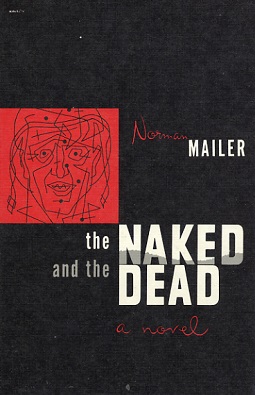
Mailer, the overnight sensation...


It's guaranteed to happen once a year. Some unknown author emerges from out of the dark shadows of obscurity and publishes a book that goes through the freakin' roof. The book's sales not only blow away even the most major of commercial authors (think James Patterson and Stephen King here), they could arguably outdo the Gross National Product of some small nation-states.

You, as an author, find yourself shaking your head in dismay. Not only have you never heard of this now overnight-famous author, you have been writing for years and years, published several books, and your annual sales don't even come close to this writer's weekly revenue. You look up his or her bio, and you become even more distraught. The author, the bio claims, has worked as a cook, or a video store clerk, or was on welfare until his book was published and every single reader in the world dropped what they were doing and when out to buy it. Or so it seems.

But wait, where have you gone wrong? You've done everything the right way. You started out by working at the local newspaper, then published short stories in the best literary journals, made your way through writing school, nailed a big contract, began establishing a career of steady sales, fans, and contracts. You've nailed all the Amazon lists and some of the traditional lists as well. You make a nice income and have a nice life. You've done everything right. Shouldn't you be the one with the huge blockbuster that blows the doors (or covers) off all other books published that year?
The novel that sealed the young author's fate.

If only logic had something...anything at all...to do with the publishing business. 

So what are your options? Sit down and read these books? Try and uncover their magic? Maybe you can somehow write a book just like them. Maybe you don't know it yet, but you're the author of the next A Million Little Pieces, 50 Shades of Gray, or Harry Potter. So you set your sights on writing something with a plot and characters that don't necessarily interest you, but you're sure contains the perfect recipe for the next bestseller.

Big mistake.

Back in 1998, an agent in NYC suggested I write a novel with a black man as the detective protagonist because that was the "in thing." I didn't do it. What do I know about writing from a black man's perspective? Why should it interest me? Besides, James Patterson was already doing it, and I would just seem like a copy cat. Fact is, many of these huge bestsellers are often, one-shot, one-hit-wonders. Tremendous pressure is placed on the author to duplicate not only the book, but also the sales. Usually, both fail to meet the grade established by the initial blockbuster success. Norman Mailer, who nailed one of these hits right out of the gate, witnessed the near dismantling of his career with two follow-up books that stunk up the joint, even if they were brilliantly written.

Many of the big one-time hits, however, aren't very well written. They create a hysteria not because of their value as a piece of literature, but simply because they have touched a trendy nerve. Again, referring to Mailer, he once said of these books, "The popularity of bad writing is analogous to the enjoyment of fast food." This is not to say all of these books are bad (after all, in the final analysis, even filet mignon ends up in the same porcelain God as the Big Mac). Some are brilliantly written and will stand the test of time (think Wool by Hugh Howey and Grisham's The Firm). Inevitably, the value of these novels is up to you, the reader.

But as a writer, what should you do in order to become a mega-famous, overnight sensational bestseller? As you mature, and practice your craft, you will come to realize that writing only about the things that interest you is the best and most trusted method of staying the often agonizing course of a full novel, which can take upwards of up to a year to write. In other words, don't force it, or else you'll end up like a rabid dog always chasing its tail (or in this case, tale...forgive me). Attempting to figure out why one book sells better than others is not only an inexact science, it is an absurd science devoid of logic, but chuck full of emotion. We all want to have that one book that sells a thousand or more copies per day for weeks or months. I've had the good luck of nailing a couple of these, but for every bestselling book I write, I have two or three that I can't even get my mother to buy.

The next time a relative unknown author scores a million seller right off the bat, remember, that author could have written a hundred novels before nailing his first huge success. Or, it could be his first and sadly, his only success. This is a business that just can't be controlled or trusted. The only thing you can trust is yourself to write a well as you can, as steadily as possible, and to practice the nail biting discipline day in and day out that's required of the next huge overnight sensational bestseller.

WWW.VINCENTZANDRI.COM

Tuesday, August 20, 2013

Pam Stack's "Author's on the Air" Interview with Vincent Zandri

The lovely Pam Stack


Thought I'd give you something different from the Vox for a change. Just this past Saturday I had the distinct pleasure of being the guest of Miami's Pam Stack. Via her popular Blog Talk Radio program, Authors on the Air, she has interviewed some of the hottest and most popular thriller writers at work today, including Dave Zeltserman, Meg Gardiner, David Morrell, and many more. I can't tell you how honored I am to enter into the ranks of these great writers. Before you listen, it might interest you to know that BlogTalk Radio ranked my show #4 out of 30,000 other programs being aired that day. A number which astounds me and really pleased Pam. I can tell you this, it's rare that I listen to the podcast of an interview once it's in the can. But Pam Stack's questions and delivery were so professional and knowledgeable, that she really made me work for my answers. In the end, I think we both did a pretty good job. And I was pleased to give it a very good listen. 

With that, I give you....


                                                  WWW.VINCENTZANDRI.COM

Sunday, July 14, 2013

Party's Over! Don't Let the Door Slap You in Ass on the Way Out...


"Party's over..."


Just arrived back from Thrillerfest in NYC.

As always it's...well...a thrill to hang out with my publishers and drink and eat and gossip and pat one another on the back. It's even greater to see some of the very talented and successful authors who through the years have become real friends. It's even fun to be in the presence of some authors who are not my friends but whom I'm a fan of. Big names like Michael Connelly, Anne Rice, Joseph Finder and more. It's also strange when you find yourself signing copies of your newest novel at table just two or three down from Lee Child.

"Hey Lee, how's about Tom Cruise as Jack Reacher? Not sure Mr. Smiley was the right choice. Let's grab a beer and talk about it later."


Until fairly recently I've always avoided conferences like the plague.
They're expensive and time consuming, and in terms of sales not much will happen there as a result of downing a few beers with your fellow authors. An author friend of mine refers to conferences as one big "circle jerk." Yah, he's right. If however, you're looking for an agent or a publisher, literary conferences such as ThrillerFest is a good place to be (I did hear of one neophyte writer who pitched an agent and signed up with him on the spot...).

Two years ago, I attended my first Thrillerfest back when I was strictly independent. I walked in like I owned the joint, having just come off the sale of 100,000 editions of The Innocent, another 30 or 40K of Godchild back up by similar numbers with The Remains.

One year ago, I had just signed a 7 book, "very nice" deal with Thomas & Mercer. We were anticipating the first batch of books to be released on October 1, with a couple of books to be released in December 2012. It was an exciting time, because life was all about the anticipation.

This year there was still excitement, but life is more or a work in progress at present. I'm speedily earning out my advance, while finishing some new books, and anticipating which roads to take when publishing them down the line.

This is a rapidly changing industry and who knows what next year will bring. I do however have a strong feeling that the writer who walked through the doors of the Grand Central Hyatt (the home of Thrillerfest) this year, will not be the same writer who walks through them in July 2014. The work in progress year will quickly come to a close this Fall as the new writer emerges from his cocoon and dramatically steps up his game in terms of writing, publishing, and marketing.

After all, being a writer is like being a shark. If you're not always moving forward, you die.


Thursday, June 7, 2012

How My Books Are Born


"Awww, I've got so many stories to tell..."


A prominent lit blogger has asked me to pen a guest blog that details the-story-behind-the-story so to speak of all my books. Talk about an intimidating task, and considering this is a blog and not paid journalism, I'm more inclined to lean towards brevity and my humble wits than get into something that could arguably take a few days and cover an expanse of at least twenty thousand words.

So the question looms large. How are my books born?

My first novel, Permanence, a literary romantic/suspense/thriller (did you get all that?) is a fictional recounting of my my honeymoon to Italy and something I overheard about a psychiatrist who entered into what would be a fatal love affair with a disturbed client. "Wow, I gotta write that one," I remember telling myself as I wiped the peach fuzz from my chin. It was the spark that lit the fire. I was a young literary neophyte and convinced I would set the world on fire with my words.

Course, it took a while for the fire to start. But it's still burning and I'm still stoking it with my follow-up novels like The Innocent, Godchild, The Remains, The Concrete Pearl, Moonlight Falls, Moonlight Rises and the whole kit and kaboodle Moonlight Collection. More traditional gumshoe novels with quirky and sometimes brooding protagonists...anti-heroes...who on occasion find themselves doing some pretty bad things in order to do what's right and to uncover the truth behind a series of lies and injustices. Characters inspired by the authors who came before, like Robert B. Parker, Jim Crumley, James Patterson, Michael Connelly, Harlan Coben and others.

The Innocent is derived from the real-life story of a prison escape that occurred at Green Haven Prison and also the Attica uprisings of the early 1970s. The Moonlight stories, however, are mostly made up. The product of my vivid imagination and love of over-the-top plot lines. They are inspired by Charlie Huston, one of the contemporary noir greats. Also, Boston Terrain, another contemporary great.

I'm currently working on two more novels. Moonlight Sonata...again, entirely made up...and Aziz, a fiction based upon a truth I overheard about an American officer who becomes a casualty in Afghanistan after ordering an airstrike on a Tajik village. Now in Venice with his fiancee nursing his wounds, which also include unexplained bouts of temporary or hysterical blindness, he finds himself in the desperate position of having to find and rescue his future bride when she goes suddenly missing.

I guess Aziz means I'm back to combining the literary with the thriller and romantic suspense genres. Which means I've come full circle. But then, that's what writers do. Invent and reinvent and steal from what's happening in the world around us. Capturing a portrait of the truth and reinventing it for the page like Monet reinvented a garden scene for the canvass, and in doing so making it more real than than God intended.


Tuesday, September 28, 2010

Bestselling Thriller Author Jason McIntyre Speaks Out about Suspense


My great white north bro, Jason McIntyre, is a young thriller novelist who not only knows how to keep the thrill in thriller, he also writes some of the most beautiful sentences being published today.

Reminiscent of Michael Connelly on literary steroids, the dedicated Indy author has greedily occupied the number 1 Spot on the Smashwords Thriller Bestseller's List with his debut novel, On The Gathering Storm, since it was released this past summer. This is the story of a young, beautiful adventurer and photographer, Hannah Gerretty, who makes her way to a secluded island paradise to live the romantic bohemian life, only to find herself lost inside an impenetrable forest, and the target of the worst kind of evil. This is not the kind of story you start at ten o'clock at night. That is you want to get any sleep at all!

McIntyre is a literary thriller writer who is not afraid to utilize the accurate metaphor and imagery that only a photographer who thinks like a photographer, can invent. From the novel's opening pages:

Hannah Garretty sees things. She’s always seen things. She’s a photographer and a good one too, so she sees regular, everyday things in a different way than most. But this is different. Tiny stolen moments like these are more than creative vision, more than simple daydreams. What Hannah sees are glossy postcards of the Yet to Come, held before her mind’s eye for a fraction of a second, then yanked from view without reason and never seen again. But they stay with her, these fraction-grasps of second sight, like the bloody spot burned on a retina after staring right at the sun: not a perfect reproduction, but a blurry and pale recording of the original.


So how does the master manage to invent nail biting suspense? He is kind enough to reveal some of his trade secrets to us with this brand new blog that pays homage to another lit-thriller great who bears the last name of King and who reigns as one as well. In the thriller world that is. That said, I present to you my guest, the distinguished bestselling author, Jason McIntyre:

A Non-Genre Writer's Look at Suspense
Jason McIntyre

Years ago, a film-maker friend of mine told me he wanted to try something radically different with his next project: he wanted to shoot a story that had absolutely no conflict.

He told me he didn't want to have a boy-meets-girl-then-loses-girl-love-story or a man-robs-bank-to-provide-for-his-family morality play or anything else that showed person A coming up against person B or obstacle C or life-changing circumstance D.

I thought about it for a bit, concluding that it definitely would have been unique among popular films at the time, but also would have been maddeningly boring. It might have made a somewhat interesting, avant garde music video done the right way, but it most assuredly wouldn't be a story. Conflict, and by association, suspense, is the very core of a good story. Without it, there is nothing to read, view or listen to that has any real value.

And, it doesn't really matter whether your medium is film, music or literature, holding the audience in your hand and doling out to them enough to keep them glued to your tale, but not so much that they're walking away, is the true test of a good bit of storytelling…and my definition of suspense.

You can write in a horror or suspense genre or you can be entrenched in serious drama, but if you're doing it right, there will always be some level of suspension. Your words are the bridge from the beginning of the story to the other side of a great chasm. How you use them keeps the bridge from falling and the reader held aloft, far above the churning waters, but close enough to feel the spray when it white waters crash on the rocks. The danger of falling needs to always be present, even if it's not a dangerous kind of story -- even if it's only a story about two lovers who are twenty years apart in age.

There, that's suspense. It might not be huge, or life-threatening, but everyone in the room can put up their hand and say that they could foresee some difficulty in that: a man in his twenties, a woman in her forties, the two of them still mad with passion for each other. Roll cameras. And. Action!

I look at suspense in fiction and I say it's well-done if it meets two criteria.

First, has the author created an expectation that something is very wrong?

And, if not very wrong, then maybe it is currently sitting at "not quite right" and he is presently building-building-building with each major "moment" in the story to that spot of being very wrong. If so, tighten the straps and release the button on the drip bag next to your gurney. Things will get pulled out of proportion. And they should.

Good authors do "wrong" very well and the tricks employed come across as natural, so, basically, not as tricks at all. The concept of "building" is also key here. You want to see something amiss right out of the gate, but you also want room to grow the feelings of unease in the opening forty pages of a story. It should rise like the crescendo of a classical piece of music, and, contrary to what some may say, it should build at a predictable rate.

A solid current example of this in pop fiction is the readily available excerpt from Stephen King's new story collection, Full Dark, No Stars. The story is "A Good Marriage" and the snippet is here.

Now, I won't ruin it for you if you haven't read it. Go ahead, if you're curious. I'll wait. There. Neat, huh? Obviously I don't know where this story is going. And I don't want to. But what he's done is a very solid, very suspenseful piece. King is obviously very good at this. I don't need to remind any of you that he's one of the reigning masters, but I don't know if this story will wind up being good in the end. Who knows, right? Not until the final sentence. But at this moment, it illustrates my point very nicely. No one is clinging to the edge of a cliff in a thunderstorm. No one is holding a knife to my throat and threatening to cut. But I'm suspended, nonetheless. I want to keep reading and find out what the bloody hell this wife has found in the garage she shares with her husband.

Second, does the author create a world where we, the readers, do the opposite of "suspending our disbelief?"

The reader needs to believe that what is happening could happen, may have happened, will happen, or, in fact, happens every single day in the world that he calls home. This is done through impeccable research and staying true to what most reasonable people would believe they would do in a similar situation, given the same facts. Even if it's science fiction or dark horror with strange things making scheduled visits in the dark of the night (read my free short novel, Shed, for more of this kind of weirdness), the world should be recognizable, either by its physical make-up or by its characters.

The above example by King gives a good dose of what I mean here, too. Anyone who's ever been, married--even for five minutes--will "get" what King is saying about these two people, their habits, their foibles, there angst and their love. Colliding and sparking and retreating over the course of time, these two people are married. Plain. Simple. Married. And the "realness" of it shows in every sentence. With a set up like this, how can we not believe whatever is about to come next, even if it is at once off the wall and, well, unbelievable?

So my bottom line for feeling appropriately suspended while I read a book (in any genre, not just the suspense genre) or while I watch a tv show, a flick or the top of the pizza box are these two ideas: Is something itching that spot behind my eyes, making me think twice about whether this should be happening? And. Do I truly believe I'm reading or seeing something in the real world as I've come to know it?

Could this really be happening?

And, if it could, then I will immediately be freaked out when the bed moves under me, even if it's only an inch.

* * *
Jason McIntyre is the author of the current Smashwords bestseller, "On The Gathering
Storm". He has also written the acclaimed short novel "Shed" and many other stories.
You can connect with him and learn more about his work by visiting his official website,
http://www.thefarthestreaches.com .

Vincent Zandri is the bestselling author of The Remains and the forthcoming The Innocent.
www.vincentzandri.com