
 |
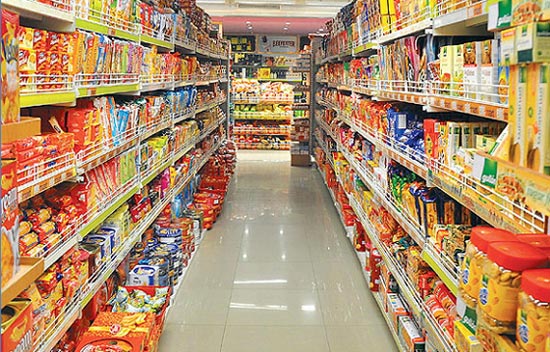
| The Mega Mart |
Hey, first off, this is nothing against farmers. I wanna make that perfectly clear from the get go (I love farms and farmers). I'm just using the above-stated title as a metaphor inspired by a short book I read while traveling devoted to modern writing and publishing by hybrid (now almost entirely indie) author, Dean Wesley Smith called The Magic Bakery. (BTW, Smith has made millions as a fiction author).
In so many words, Smith says that one of the big reasons authors don't make a lot of money is because they don't have enough inventory. In other words, their bakery only has one or two pies in it. A person walks in, sees the lack of goodies and walks back out.
Smith also goes deep into copyright as well and provides a very convincing argument on why authors, even when signing traditional deals, should never give away all of their "world" copyrights. What it means is that that product, or pie, in this instance, is gone forever, and in the hands of someone else who will choose to sell it, or not, for the rest of that author's life.
But right now, I wish to concentrate on the inventory side of things. It's taken me a long, long time to realize that as a hybrid author (a guy who publishes traditionally and independently), I have maintained the mindset of the farmer. You know, you work your ass off, cultivating acres of corn, for instance (it could be apples, or cattle, or wheat...but you get the picture). You pray for good weather, you toil, you watch the fruits of your day in and day out labor grow each and every day, week by week, month by month, until finally it's ready to be brought to market.
But that's when the problems set in.
The market forces are beyond your control at that point. Maybe there's a glut of corn that year and you can only charge a price that hardly covers the cost of what it took to produce your crop. Or maybe a tornado hits and your crop is wiped out. Or maybe the supermarket chains that used to carry your corn are closing down or going with a brand new, younger, more tech savvy, more algorithm friendly supplier. Whatever the case, you're shit out of luck.
 |
| The ruined harvest |
Who hasn't at one time or another, gone into the mega mart for a head of lettuce, a carton of milk, some toilet paper, and oh yeah, "Don't forget the eggs, honey," and comes back out with three bags full of steaks, potato chips, some lunch meat, a six pack of beer, and "Oh crap, I forgot the eggs."
The point here is that unlike the farmer who is relying on selling one or two products every year and who is entirely at the mercy of forces beyond his or her control, the supermarket CEO is dealing in vast quantities of products, all packed nice and neat with beautiful labels, and smart positioning on the shelves, and even that corny canned-in Musac to enhance the shopping experience. And what else is he doing? He's giving away free samples. A slice of rare roast beef here, a piece of cheese there, or maybe a little hot dog wrapped in dough (I forget what they call them...oh yeah, pigs in a blanket). And many mega marts now encourage you to become a member of the store so that you get a "discount" and they, in turn, grab your email. See how that works?
While the farmer must rely on that one (or two or three) big ass payouts per year in order to make it, the supermarket CEO is doing something extremely savvy. He's making a fortune by selling thousands of products that make him $0.50 here, or a $2.00 there, and he's doing it on a daily basis. He is reliant only on himself and his own imagination and no way in hell is he selling off, say, the produce section to another company for a one time advance so that said company can keep making money off all that greenery forever and ever. At best, the supermarket CEO might make a limited deal with say a Starbucks to come in a set up a space where they'll sell coffee and both entities take a cut of what's sold. But I think by now you get the point.
In this day and age, everything a writer produces of quality, should be controlled by the writer. Even up until recently I've made the mistake of selling properties to publishers who simply do not know how to move product. Nothing against them per se, but what I'm getting at here is that I'm like the farmer in this situation. I am at their mercy. Again, that doesn't mean I am not willing to work with them, but the price and the terms must be right and my corn (my book or short story or article) cannot disappear from my control forever. After all, I have kids who will one day earn from those many ears of corn.
If you're lucky enough to be prolific and talented as a writer, there has never been a better time for you to start your own mega-mart (or magic bakery) full of goodies and products that will not only entice a buyer, but that will encourage that buyer to keep coming back and buying more and more. They don't have to buy thousands of dollars worth of stuff in a single visit, but hey, five bucks here and three bucks there, adds up to a nice chunk of change at the end of the day.
So do yourself a favor come Monday morning. Get up and write not only to put in that daily word count, but write like you're putting a new product on the mega-mart shelf. And once that product is created, produce a new one, and another new one, and another...Then see what happens.
WWW.VINCENTZANDRI.COM


